
Autumn, the Lungs and the Art of Letting Go
In Traditional Chinese Medicine, autumn is connected with the Metal element and the Lung and Large Intestine systems. It is considered a time of gathering inward, adapting to cooler and drier weather, and beginning to release what we no longer need.
The Lungs are associated with breath, protective Qi and our ability to take in what is nourishing. The Large Intestine is linked with elimination and letting go. Emotionally, autumn can bring grief, wistfulness or memories closer to the surface.
You might also notice the physical effects of the changing season: a dry or scratchy throat, dry skin and sinuses, changes in digestion, shallow breathing or feeling more susceptible to seasonal bugs.
These are traditional TCM associations rather than medical diagnoses, but they offer a useful invitation to slow down and pay attention to what your body may need.
Two acupressure points for autumn
Acupressure can be a lovely way to pause and reconnect with yourself. Use comfortable pressure for 30–60 seconds while breathing normally, then repeat on the other side.
LU7 - Lung7 Lieque
Benefits/notes: Traditionally used to help with respiratory symptoms and to strengthen lung qi
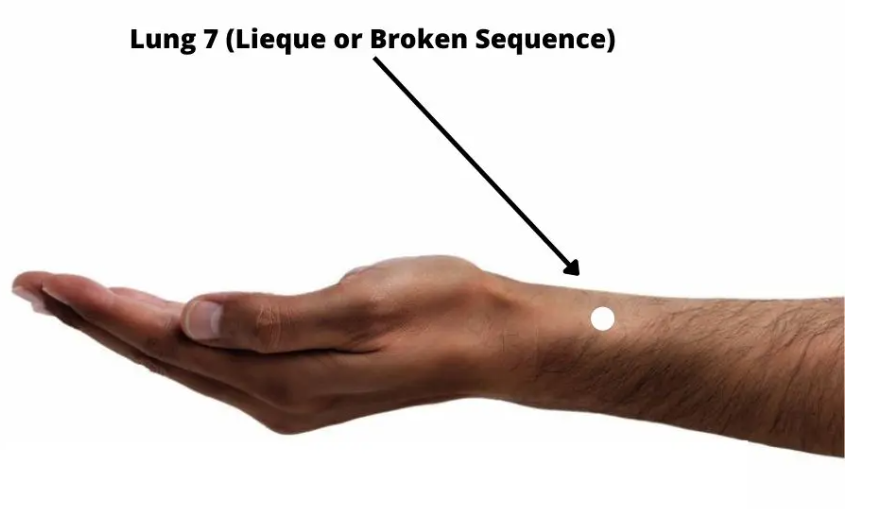
LU7 is located on the thumb side of the forearm, approximately two finger-widths above the wrist crease, in the small groove above the bony prominence of the wrist.
In TCM, LU7 is traditionally used to support the Lung system and is often selected for patterns involving the throat, head, neck and exterior of the body.
Try gently pressing or massaging the point while allowing your exhalation to become a little longer and softer.
LI4 Hegu
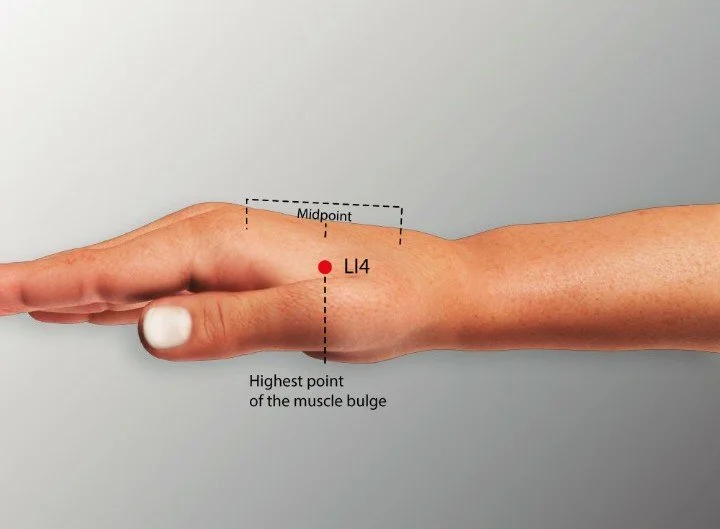
LI4 is found in the fleshy area between the thumb and index finger. Bring the thumb towards the index finger and locate the highest point of the muscle bulge.
It is one of the most commonly used acupressure points and is traditionally associated with the head, face and the movement of Qi.
Press the point while consciously softening your jaw and shoulders.
Avoid LI4 during pregnancy unless you have been advised to use it by an appropriately qualified practitioner.
Three seasonal activities to try
1. Take a breathing walk
Go outside for ten or fifteen minutes without headphones. Let your arms swing naturally and notice the feeling of the air entering and leaving your body.
Every so often, allow your exhalation to become slightly longer than your inhalation. Keep the breath comfortable and unforced.
2. Make something warm and nourishing
Autumn is a lovely time to move towards porridge, soups, stews, cooked seasonal fruit and warming grain dishes.
Congee is a gently cooked rice porridge that can be made sweet or savoury and adapted with whatever you have available.
Try this recipe: Healing Rice Porridge Magic Soup
3. Create a small letting-go ritual
Write down one thing you are ready to release. It might be a habit, expectation, commitment, resentment or way of speaking to yourself.
Tear up the page, place it in the fire safely, or simply close your journal and take three steady breaths. It is simply a way of acknowledging that you are ready to make a little more space.
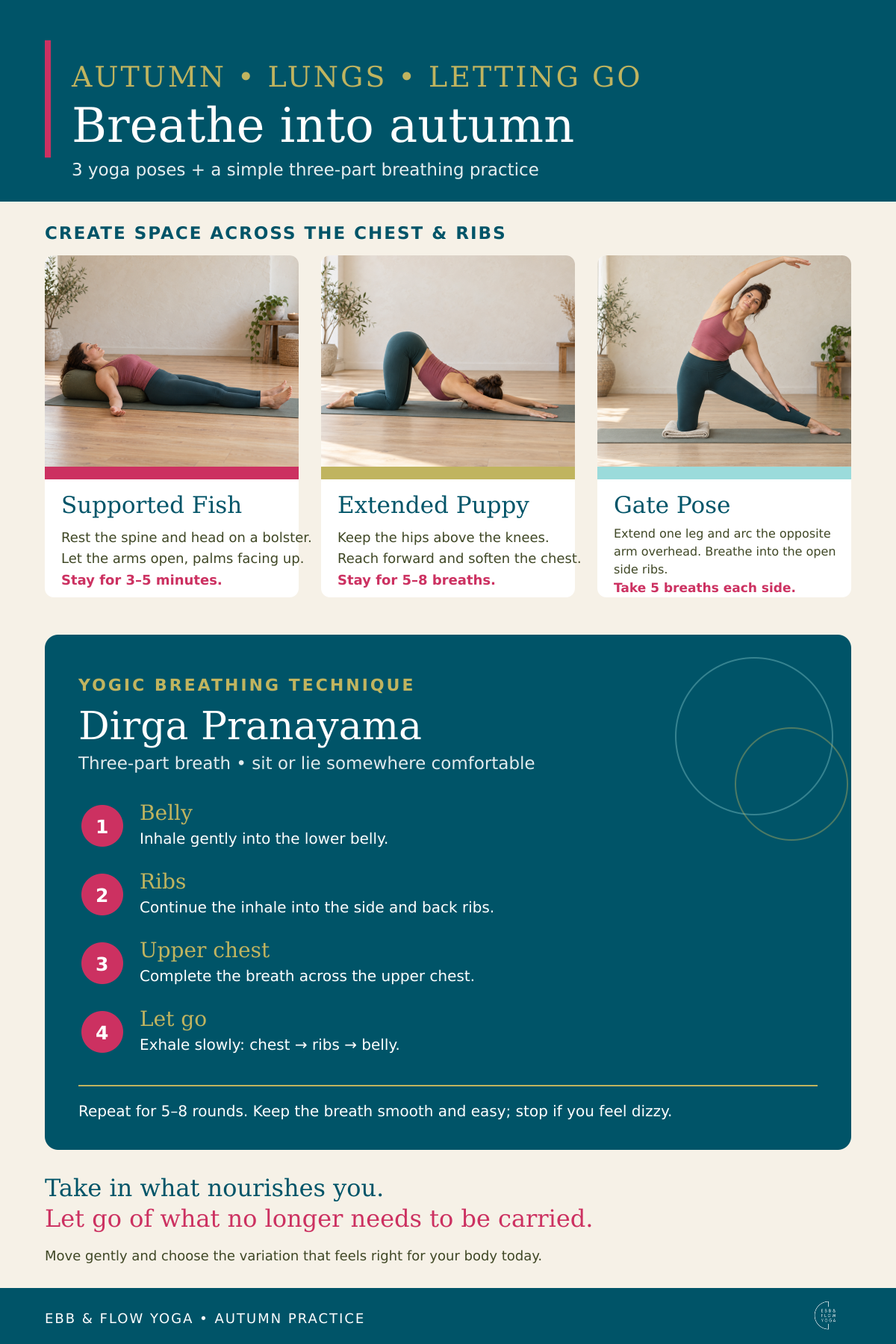
4. Try these Yoga Poses & Pranayama
Try these 3 simple poses perfect for opening up your chest and maximising how much air you can inhale. Slow deep breaths result in good intake of air qi into the lungs, this combines with the qi we extract from our food to create gathering qi. This energy source is our daily fuel. I hope you enjoy Dirga Pranayama also, an ancient style of yogic breathing to help boost lung capacity and draw in prana/qi/energy.
Five autumn journaling prompts
What feels complete in my life, even if I have not fully acknowledged it yet?
What am I carrying that no longer needs my time or energy?
Where could I create more space in my home, schedule or relationships?
What helps me feel nourished, protected and steady as the days become shorter?
What would I like to make room for during the remaining months of the year?
Autumn does not need to mean making enormous changes. A warm, cooked breakfast, a few deep breaths, an earlier night, a walk outside or five minutes with your journal can be enough to begin moving with the season.
This is a small taste of the seasonal practices I share through Ebb & Flow Yoga, where we explore movement, breath, rest and Traditional Chinese Medicine-inspired self-care in a practical and accessible way.
*Please seek medical advice for persistent respiratory symptoms, chest pain, significant chest pressure, breathing difficulty or any other concerning symptoms.